We all woke up around 7:30 AM, and we rushed down to eat breakfast in the hotel breakfast area. Once we ate, we headed back up to our rooms to finish packing and get ready to leave. We left our hotel around 8:30 and headed to the train station to wait for our train. When we got to the train station, we headed to our waiting area and sat, all of us playing party games together as we waited. When the train arrived, we boarded the train and headed off to Barcelona. On the train, we continued playing party games until we arrived at the Barcelona train station around 1:00 PM.
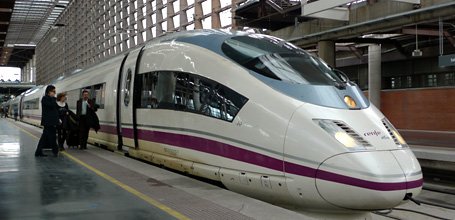 |
| The train to Barcelona |
When we arrived at the train station, we all got off the train as quickly as we could and headed off to our hotel. Once we got to our hotel, we headed to our rooms, dropped off our stuff, and headed back out to go to the Sagrada Familia. Once we got to the church, we all headed in after waiting in the lines for a few minutes. Even before we entered, we saw the enormous size of the church and how much of it was still to be built.
Sagrada Familia // History
 |
| Sagrada Familia |
According to our audio tour guide, Sagrada Famila has an extremely rich history. The contruction of it began in 1866, the construction continuing with some breaks from then to now. In 1866, Josep Maria Bocabella i Verdaguer founded the "Spiritual Association of Devotees of Saint Joseph", a group that in 1874 began campaining for the contruction of a temple dedicated to the "Holy Family". Shortly after the first stone was laid on March 19th, 1882, the first architect of the church resigned and the job fell to Antoni Gaudi in 1883, and from the Gaudi took control over the project and continued work. By 1889, the crypt of the church had been completed, and Gaudi began work on the apse, followed by the Nativity facade and provisional school buildings. After several more years of work on the church, he died on June 10th, 1926, buried two days later in the crypt of Sagrada Familia. After his death, his close collaborator Domènec Sugrañes took over the management until 1938. In 1936 during the Spanish Civil War, the crypt, provisional school, and studio workshop were all burned down, losing many of the original plans and models. From then, the church continued to be built up and grow in size, still growing to this day. With new technology, the construction has sped up, and through all the hardships, it has never fully stopped construction.
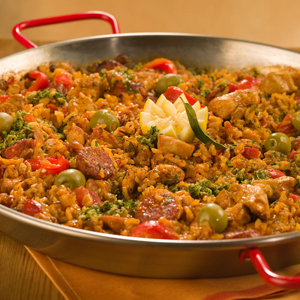 |
| The paella we ate |
Artespañol // Indigenous Food
After we explored Sagrada Familia, we headed to dinner at Artespañol. There, we all ate meat paellas, which was a mix of rice, chicken, green and red peppers, tomatoes, garlic, peas, pork, and assorted vegetables. Originating in Venitia, this incredible meal is signature to Spain. It is a mix of food that many people before having paella believe should not ever go together. However, in paellas, they work together to create the perfect blend of flavours all in a beautiful arrangement. It is unique for Spain because it is a blend of flavours and foods that most people would not believe ever putting together, and thus is not reflected in many other meals and dishes.
After we were done with our amazing meal, we went ahead and headed back to our hotel, playing party games for a few hours before heading to bed. As we all fell asleep, we all enjoyed the taste of the food we had eaten for dinner, aside from David, who had remembered to brush his teeth, and was instead dealing with the annoying taste of toothpaste.

No comments:
Post a Comment